Fall Prevention Physiotherapy in Coimbatore: Helping Elderly People Improve Balance, Strength, Walking Safety, and Confidence
Fall Prevention Physiotherapy in Coimbatore: Helping Elderly People Improve Balance, Strength, Walking Safety, and Confidence
A fall in an elderly person is not a small incident. For many families, one fall can lead to fracture, hospitalization, surgery, fear of walking, reduced confidence, long bed rest, and increased dependency.
Many elderly people do not fall because of one single reason. Falls usually happen due to a combination of weakness, poor balance, knee pain, poor vision, dizziness, improper footwear, unsafe home setup, medication effects, stroke, Parkinson's disease, arthritis, or reduced confidence in movement.
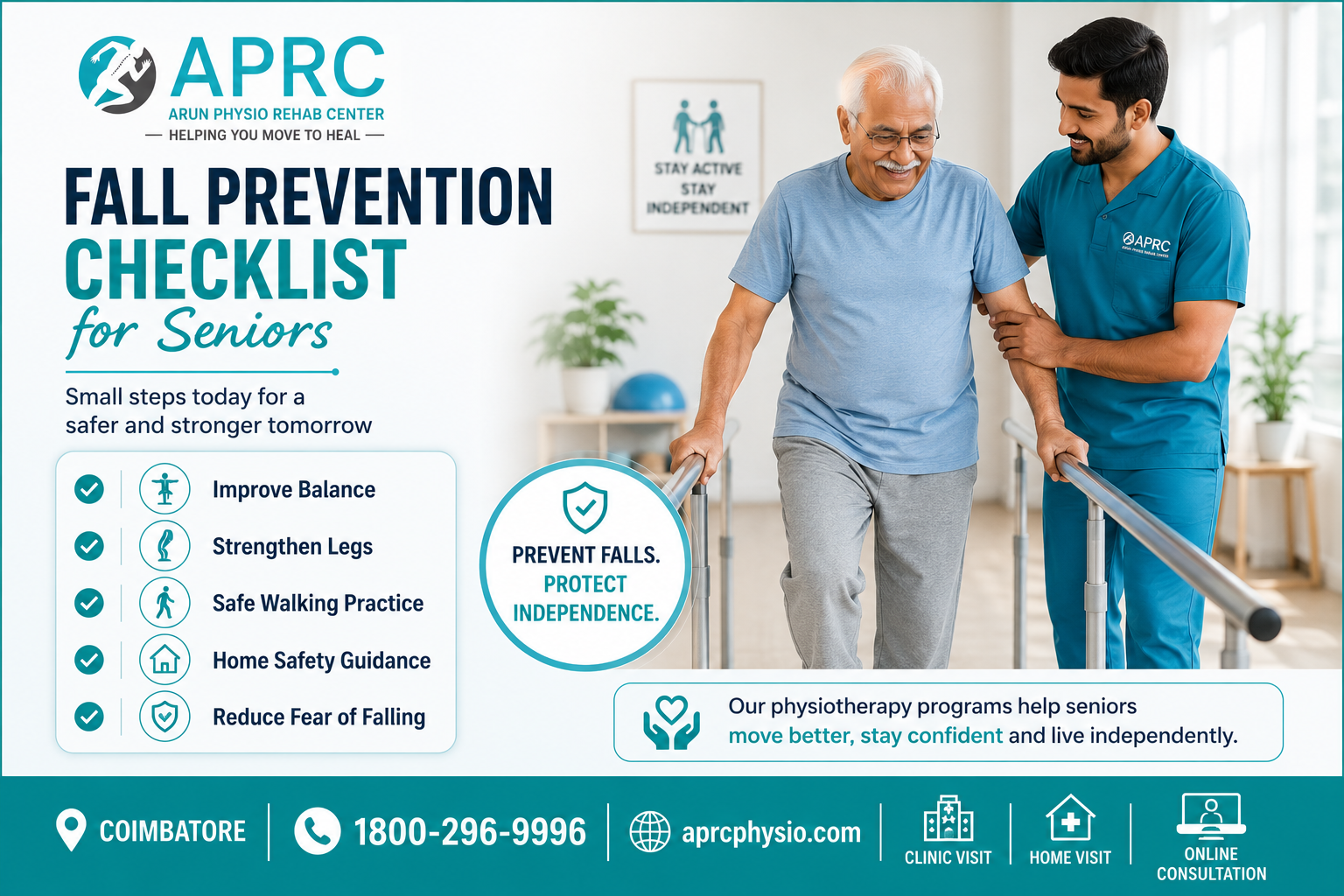
Fall prevention physiotherapy helps elderly people improve strength, balance, walking safety, posture, coordination, and confidence. The goal is to reduce fall risk and help seniors move safely in their daily life.
At APRC – Arun Physio Rehab Center, we provide fall prevention physiotherapy in Coimbatore through clinic-based rehabilitation, home visit physiotherapy, and caregiver-guided exercise support.
What Is Fall Prevention Physiotherapy?
Fall prevention physiotherapy is a specialized physiotherapy program designed to reduce the risk of falls, especially in elderly people and people with balance or walking problems. It focuses on improving leg strength, balance, walking pattern, posture, coordination, reaction control, sit-to-stand ability, stair safety, and home safety awareness.
Why Fall Prevention Is Important for Elderly People
Falls are one of the major health risks in older adults. After a fall, an elderly person may develop hip fracture, wrist fracture, shoulder injury, head injury, fear of walking, loss of confidence, reduced activity, muscle weakness, and increased caregiver burden. Many elderly people stop walking after a fall because they are afraid — and that inactivity makes them weaker and increases fall risk further.
Common Reasons Elderly People Fall
- Weak leg muscles
- Poor balance
- Knee pain or arthritis
- Stroke-related weakness
- Parkinson's disease
- Dizziness or vertigo
- Poor vision
- Foot numbness due to diabetes
- Improper footwear
- Low blood pressure while standing
- Unsafe bathroom setup
- Loose mats or slippery floors
- Poor lighting
- Cluttered walking areas
- Difficulty getting up from a chair
- Fear of falling
- Medication side effects
Signs Your Parent May Be at Risk
Consider fall prevention physiotherapy if your elderly parent has fallen once in the past year, has frequent near-falls, fear of walking alone, slow walking speed, shuffling, difficulty turning, difficulty getting up from a chair, poor balance, holding walls while walking, knee buckling, foot dragging, dizziness, or reduced confidence in movement.
How Physiotherapy Helps Prevent Falls
Balance Training
Balance exercises help improve stability while standing, walking, turning, reaching, and changing direction.
Strength Training
Stronger leg, hip, and core muscles support standing, walking, stair climbing, and getting up from a chair.
Walking Training
Walking training improves step length, foot clearance, speed, posture, and confidence.
Sit-to-Stand Training
Many falls happen while getting up from a chair or bed. Sit-to-stand training improves leg strength and transfer safety.
Stair Training
Stair climbing requires strength, balance, and coordination. Physiotherapy teaches safe stair strategies.
Walking Aid Guidance
A physiotherapist can guide safe use of walker, stick, or other walking aids when needed.
Home Safety Advice
The therapist may suggest practical changes to reduce fall risk inside the home.
Caregiver Education
Family members are trained on safe support, transfer methods, fall response, and daily movement supervision.
Fall Prevention After Stroke
Stroke can cause one-side weakness, poor balance, foot drop, and walking difficulty. Fall prevention physiotherapy after stroke includes sitting balance, standing balance, weight shifting, walking practice, transfer training, and caregiver education.
Fall Prevention in Parkinson's Disease
People with Parkinson's may have shuffling gait, freezing, forward-bent posture, and difficulty turning. Physiotherapy may help with posture correction, cueing strategies, turning practice, balance training, and freezing management.
Home Safety Tips
- Remove loose floor mats
- Keep walking areas clear
- Improve lighting
- Use non-slip bathroom mats
- Install grab bars if needed
- Use proper footwear
- Avoid walking in loose slippers
- Use night lights
- Avoid rushing
When Should You Book Fall Prevention Physiotherapy?
Book an assessment if the elderly person has fallen recently, has near-falls, feels afraid to walk, holds furniture while walking, has poor balance, weak legs, walks slowly, or has Parkinson's disease, stroke, or knee arthritis.
Why Choose APRC for Fall Prevention Physiotherapy in Coimbatore?
APRC provides structured fall prevention physiotherapy through clinic visits, home visits, and guided follow-up care — helping elderly people stand better, walk better, and reduce fall risk in daily life.
Frequently Asked Questions
1. What is fall prevention physiotherapy?
A rehabilitation program that reduces fall risk by improving balance, strength, walking safety, and confidence.
2. Who needs it?
Elderly people with falls, poor balance, walking difficulty, weakness, stroke, or Parkinson's disease.
3. Can physiotherapy prevent falls?
Yes. It helps reduce fall risk by improving strength, balance, walking control, and safety awareness.
4. What exercises help prevent falls?
Balance training, sit-to-stand, leg strengthening, stepping practice, and walking training — selected based on safety.
5. Is balance training safe for elderly?
Yes, when done under professional guidance. High-risk patients should not do challenging balance exercises alone.
6. Can home physiotherapy help prevent falls?
Yes. Home physiotherapy allows assessment of the actual environment and training of safe movement at home.
7. What to do after an elderly person falls?
Check for injury, pain, confusion, head injury. Seek urgent help if needed. Even without injury, a fall risk assessment is recommended.
8. Can physiotherapy help fear of falling?
Yes, by improving strength, balance, walking ability, and confidence through gradual safe movement training.
9. Can physiotherapy help after stroke?
Yes, stroke-related fall prevention improves balance, walking pattern, transfers, and caregiver safety.
10. How to book at APRC?
Contact APRC to book clinic physiotherapy, home visit, or online fall prevention guidance.
Book Fall Prevention Physiotherapy in Coimbatore
APRC – Arun Physio Rehab Center provides fall prevention physiotherapy through Clinic Visit | Home Visit | Online Guidance When Appropriate.
Call APRC today to book a fall prevention assessment.
Disclaimer
This blog is for general awareness only. It is not a replacement for medical diagnosis, emergency care, or specialist consultation.

