Women’s Health Physiotherapy in Coimbatore
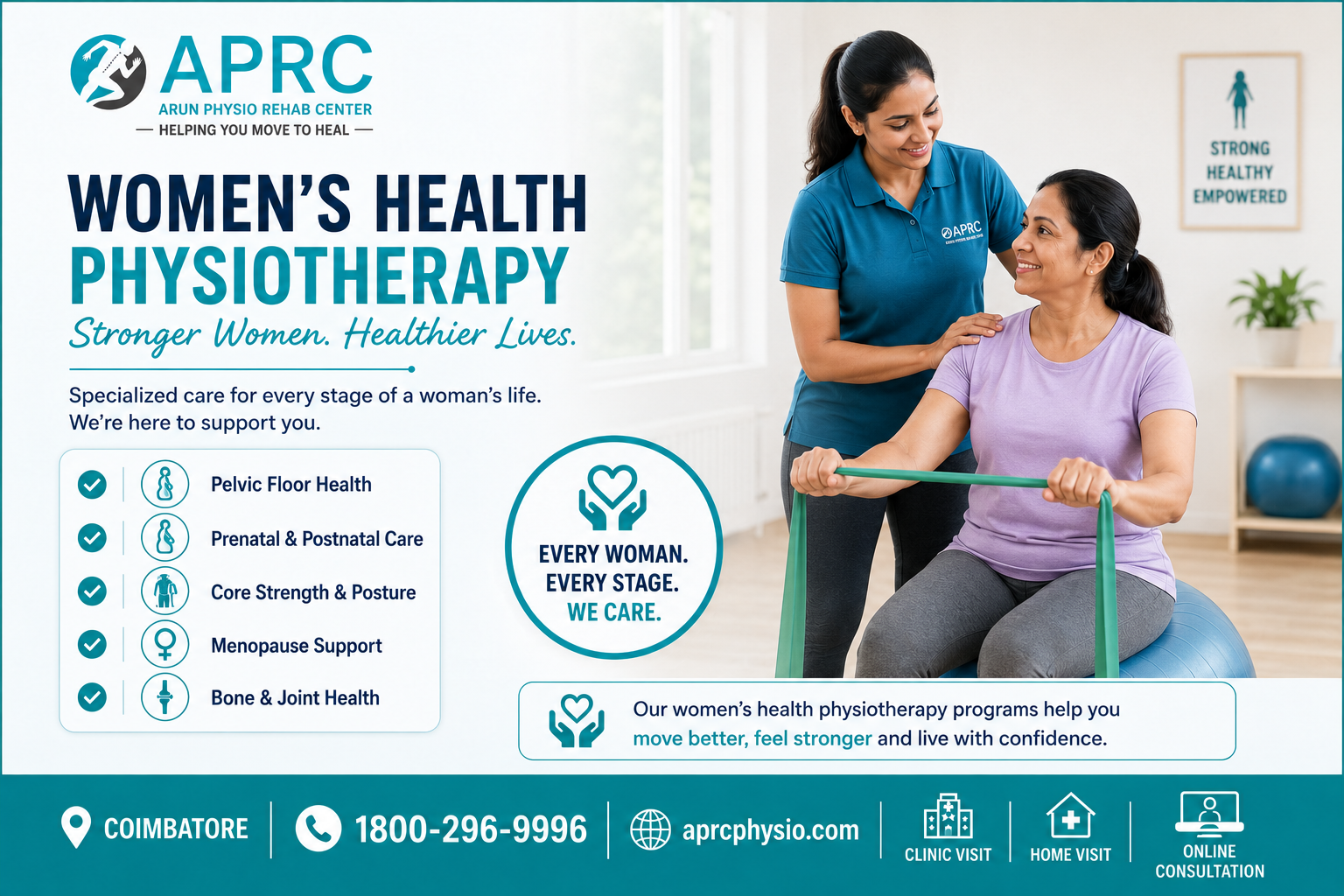
Women’s Health Physiotherapy in Coimbatore: Safe Care for Pregnancy, Postnatal Recovery, Pelvic
Women go through many physical changes during different stages of life. Pregnancy, childbirth, C-section recovery, hormonal changes, menopause, pelvic floor weakness, posture changes, and lifestyle stress can affect movement, comfort, confidence, and quality of life.
Many women silently tolerate back pain, urine leakage, pelvic pain, abdominal weakness, painful movement, or post-delivery discomfort because they think it is “normal.” These problems are common, but they should not be ignored.
Women’s health physiotherapy helps women recover safely, improve strength, reduce pain, restore movement, and regain confidence in daily life.
At APRC – Arun Physio Rehab Center, we provide professional women’s health physiotherapy in Coimbatore through clinic-based care, home visit physiotherapy, and online consultation.
What Is Women’s Health Physiotherapy?
Women’s health physiotherapy is a specialized area of physiotherapy focused on conditions that commonly affect women during pregnancy, after delivery, during menopause, and across different stages of life.
It helps with:
Pregnancy-related back pain
Pregnancy-related pelvic pain
Postnatal weakness
C-section recovery support
Normal delivery recovery support
Pelvic floor weakness
Urine leakage while coughing, sneezing, laughing, or lifting
Diastasis recti or abdominal muscle separation
Postpartum back pain
Neck and shoulder pain due to baby care
Menopause-related joint pain and weakness
Core weakness
Pain during daily activities
Return to exercise after delivery
The goal is to support women with safe, respectful, evidence-informed rehabilitation.
Why Women May Need Physiotherapy
Women’s bodies experience major physical and hormonal changes during pregnancy and after childbirth. These changes can affect posture, joint stability, muscle strength, breathing pattern, pelvic floor function, abdominal wall support, and spinal load.
Common reasons women need physiotherapy include:
Increased body weight during pregnancy
Postural changes
Weak abdominal muscles
Pelvic floor strain
C-section scar discomfort
Reduced physical activity after delivery
Poor lifting posture while caring for the baby
Repeated bending, feeding, and carrying
Hormonal changes
Menopause-related muscle and bone changes
Long-standing pain ignored for many months
Physiotherapy helps address the root movement problem, not just the pain.
Common Conditions Treated in Women’s Health Physiotherapy
1. Pregnancy Back Pain
Back pain is common during pregnancy due to posture changes, weight gain, and increased pressure on the spine and pelvis.
Physiotherapy can help with:
Safe mobility exercises
Posture correction
Back strengthening
Breathing techniques
Gentle stretching
Pain-relieving positions
Activity modification
Advice for sleep, sitting, and walking
The treatment plan should always be customized based on the stage of pregnancy and medical clearance.
2. Pelvic Girdle Pain During Pregnancy
Some women experience pain around the lower back, hip, groin, or pubic area during pregnancy. This can make walking, turning in bed, climbing stairs, and standing difficult.
Physiotherapy may help improve:
Pelvic stability
Hip strength
Movement control
Walking comfort
Bed mobility
Safe daily activity pattern
3. Postnatal Physiotherapy
After delivery, many women experience weakness, body pain, abdominal weakness, pelvic floor problems, back pain, and fatigue.
Postnatal physiotherapy focuses on:
Gentle recovery exercises
Pelvic floor activation
Core strengthening
Breathing correction
Posture retraining
Back pain management
Safe return to walking and exercise
Functional strengthening for mother care activities
Recovery should be gradual and guided, especially after C-section or complicated delivery.
4. C-Section Recovery Physiotherapy
After C-section, women may experience abdominal weakness, scar tightness, back pain, difficulty getting up, and fear of movement.
Physiotherapy helps with:
Safe bed mobility
Gentle breathing exercises
Posture correction
Gradual core activation
Scar mobility guidance when appropriate
Back and hip strengthening
Safe lifting and baby-care positions
Return to daily activities
C-section recovery should be progressive and should respect medical healing timelines.
5. Urine Leakage While Coughing, Sneezing, Laughing, or Lifting
Urine leakage is common among women, especially after pregnancy, delivery, menopause, or pelvic floor weakness. But common does not mean it is normal to live with it.
Women may notice leakage during:
Coughing
Sneezing
Laughing
Jumping
Running
Lifting weight
Climbing stairs
Sudden urgency
Pelvic floor physiotherapy can help improve bladder control, pelvic floor strength, coordination, breathing, and pressure management.
6. Pelvic Floor Weakness
The pelvic floor is a group of muscles that supports the bladder, uterus, and bowel. When these muscles become weak or poorly coordinated, women may experience leakage, heaviness, discomfort, or reduced control.
Pelvic floor physiotherapy may include:
Pelvic floor muscle training
Breathing coordination
Core strengthening
Posture correction
Bladder habit education
Functional training
Lifestyle advice
Safe lifting guidance
Not every woman needs only strengthening. Some women may have tight or overactive pelvic floor muscles and may need relaxation-based treatment. A proper assessment is important.
7. Diastasis Recti
Diastasis recti is the separation or widening of abdominal muscles that can happen during or after pregnancy. Women may notice a bulge in the abdomen, weak core, back pain, poor posture, or difficulty returning to exercise.
Physiotherapy helps with:
Core activation
Breathing correction
Deep abdominal strengthening
Posture correction
Safe movement training
Avoidance of harmful loading patterns
Gradual return to exercise
The focus is not only to “close the gap,” but to improve abdominal function and support.
8. Neck, Shoulder, and Back Pain After Delivery
New mothers often develop neck pain, shoulder pain, wrist pain, and back pain due to feeding posture, lifting, carrying, and reduced sleep.
Physiotherapy helps with:
Feeding posture correction
Shoulder and neck mobility
Back strengthening
Wrist and hand care
Ergonomic advice
Safe lifting techniques
Home exercise program
Small corrections in daily posture can create major relief.
9. Menopause-Related Pain and Weakness
During and after menopause, women may experience joint pain, muscle weakness, reduced bone strength, weight changes, urinary symptoms, and reduced confidence in activity.
Physiotherapy can help through:
Strength training
Balance training
Joint mobility exercises
Pelvic floor training
Posture correction
Pain management
Fall prevention
Safe fitness planning
Women should not stop moving because of age or menopause. The right movement plan can improve strength, confidence, and long-term health.
How Women’s Health Physiotherapy Helps
Women’s health physiotherapy is not just exercise advice. It is a structured rehabilitation plan based on the woman’s condition, stage of life, symptoms, goals, medical history, delivery history, pain level, and lifestyle needs.
A treatment plan may include:
Pelvic Floor Muscle Training
Helps improve bladder control, pelvic support, and confidence during daily activities.
Core Strengthening
Improves abdominal support, posture, spinal stability, and postnatal recovery.
Pain Management
Helps reduce pregnancy-related pain, postnatal back pain, pelvic pain, neck pain, and shoulder pain.
Posture Correction
Improves sitting, feeding, standing, lifting, sleeping, and work-related postures.
Breathing and Pressure Control
Helps coordinate breathing, abdominal muscles, and pelvic floor function.
Mobility and Flexibility Exercises
Improves movement comfort in the back, pelvis, hips, shoulders, and neck.
Functional Training
Focuses on real-life tasks such as lifting the baby, feeding, standing, walking, climbing stairs, and returning to work.
Education and Prevention
Guides women on what to do, what to avoid, when to progress, and when to seek medical review.
Benefits of Women’s Health Physiotherapy
Women’s health physiotherapy can help women:
- Reduce back pain and pelvic pain
- Improve bladder control
- Strengthen pelvic floor muscles
- Improve core strength
- Recover after delivery
- Recover after C-section
- Improve posture
- Return safely to exercise
- Reduce fear of movement
- Manage menopause-related weakness
- Improve confidence in daily life
- Prevent long-term movement problems
The main objective is simple: help women move, recover, and live with confidence.
Is Urine Leakage Normal After Delivery?
Urine leakage after delivery is common, but it should not be accepted as normal forever.
If a woman leaks urine while coughing, sneezing, laughing, lifting, or exercising, it may indicate pelvic floor weakness or poor pressure control.
Pelvic floor physiotherapy is often recommended as a first-line conservative approach for stress urinary leakage and mixed urinary leakage.
Early care can prevent the problem from becoming long-term.
When Should You Consult a Women’s Health Physiotherapist?
You should consider physiotherapy if you have:
Back pain during pregnancy
Pelvic pain during pregnancy
Pain after delivery
Urine leakage
Difficulty controlling urine urgency
Abdominal weakness after delivery
Diastasis recti
C-section scar tightness
Pain while lifting or feeding the baby
Difficulty returning to exercise
Menopause-related weakness
Recurrent body pain
Difficulty with daily activities
Do not wait until symptoms become severe. Early rehabilitation is safer and more effective.
Home Visit Women’s Health Physiotherapy in Coimbatore
Many women may find it difficult to travel to a clinic during pregnancy, after delivery, after C-section, or while managing baby care.
APRC provides home visit women’s health physiotherapy in Coimbatore for women who need safe and comfortable rehabilitation at home.
Home physiotherapy may be helpful for:
Postnatal mothers
C-section recovery
Pregnancy-related pain
Severe back pain
Pelvic pain
Women with mobility limitations
Women who need privacy and comfort
Mothers who cannot travel easily
Home-based care allows the physiotherapist to understand real-life movement challenges and give practical guidance.
Clinic-Based Women’s Health Physiotherapy
Clinic-based care is useful for women who need structured rehabilitation, progressive strengthening, pain management, and regular supervision.
Clinic physiotherapy may be suitable for:
Pelvic floor rehabilitation
Postnatal strengthening
Diastasis recti rehabilitation
Back and pelvic pain management
Return-to-fitness programs
Menopause strength and balance programs
Sports or gym return after delivery
The plan is customized based on assessment and safety.
Online Women’s Health Physiotherapy
Online consultation can help women who need guidance, exercise correction, posture advice, postnatal follow-up, or family-supported home exercise planning.
Online physiotherapy may be useful for:
Mild pregnancy pain
Postnatal exercise guidance
Diastasis recti education
Pelvic floor exercise guidance
NRI family consultation
Follow-up sessions
Fitness return planning
Online care is recommended only when safe and clinically appropriate.
Why Choose APRC for Women’s Health Physiotherapy in Coimbatore?
APRC – Arun Physio Rehab Center provides women-focused physiotherapy care in Coimbatore through clinic visits, home visits, and online consultation.
APRC provides:
Pregnancy physiotherapy
Postnatal physiotherapy
C-section recovery support
Pelvic floor physiotherapy
Urine leakage physiotherapy
Diastasis recti rehabilitation
Back pain and pelvic pain care
Posture correction
Core strengthening
Menopause strength and mobility care
Home visit physiotherapy
Online consultation
Our approach is private, respectful, safe, and focused on practical recovery.
Frequently Asked Questions
1. What is women’s health physiotherapy?
Women’s health physiotherapy is specialized physiotherapy for conditions affecting women, including pregnancy pain, postnatal weakness, pelvic floor problems, urine leakage, diastasis recti, back pain, and menopause-related weakness.
2. Is physiotherapy safe during pregnancy?
Physiotherapy can be safe during pregnancy when it is done after proper assessment and with appropriate medical guidance. The exercises should be customized to the pregnancy stage and health condition.
3. Can physiotherapy help urine leakage after delivery?
Yes. Pelvic floor physiotherapy can help many women improve bladder control and reduce urine leakage after delivery.
4. Is urine leakage while sneezing or laughing normal?
It is common, but it should not be ignored. Leakage during sneezing, laughing, coughing, or lifting may indicate pelvic floor weakness or poor pressure control.
5. Can physiotherapy help after C-section?
Yes. Physiotherapy can help with safe movement, breathing, posture, back pain, gradual core activation, and return to daily activities after C-section.
6. What is diastasis recti physiotherapy?
Diastasis recti physiotherapy focuses on improving abdominal muscle function, breathing, posture, core strength, and safe movement after pregnancy-related abdominal separation.
7. When can I start postnatal physiotherapy?
The timing depends on delivery type, healing, pain, complications, and medical advice. Gentle breathing and pelvic floor awareness may begin early for many women, but structured exercise should be guided professionally.
8. Can women’s health physiotherapy help menopause symptoms?
Physiotherapy can help manage menopause-related weakness, joint pain, balance issues, pelvic floor symptoms, and reduced activity tolerance through strengthening, mobility, and functional training.
9. Is home physiotherapy available for women in Coimbatore?
Yes. APRC provides home visit physiotherapy in Coimbatore for women who need pregnancy care, postnatal recovery, C-section rehabilitation, pain management, or pelvic floor guidance.
10. How can I book women’s health physiotherapy at APRC?
You can contact APRC to book clinic physiotherapy, home visit physiotherapy, or online consultation for women’s health physiotherapy in Coimbatore.
Voice Search Questions This Blog Answers
Who provides women’s health physiotherapy in Coimbatore?
Can physiotherapy help urine leakage after delivery?
Is home physiotherapy available for postnatal mothers in Coimbatore?
Which physiotherapy is best for pregnancy back pain?
Can physiotherapy help after C-section?
Who provides pelvic floor physiotherapy near me?
Is urine leakage while sneezing normal after delivery?
Can physiotherapy help diastasis recti?
Where can I find postnatal physiotherapy in Coimbatore?
Can physiotherapy help menopause-related weakness?
Book Women’s Health Physiotherapy in Coimbatore
If you are experiencing pregnancy pain, postnatal weakness, urine leakage, pelvic floor problems, diastasis recti, C-section discomfort, or women-related pain, early physiotherapy can help you recover better and move with confidence.
APRC – Arun Physio Rehab Center provides women’s health physiotherapy through:
Clinic Visit | Home Visit | Online Consultation
Call APRC today to book a women’s health physiotherapy assessment.
Phone: 1800-296-9996
Website: aprcphysio.com
Location: Coimbatore
Disclaimer
This blog is for general awareness only. It is not a replacement for medical diagnosis, gynecological consultation, obstetric care, or emergency treatment. Pregnant or postpartum women with heavy bleeding, severe abdominal pain, fever, chest pain, breathlessness, severe headache, sudden swelling, calf pain, fainting, reduced fetal movement, or severe dizziness should seek immediate medical care.

