Neuro Physiotherapy in Coimbatore: Rehabilitation for Stroke, Parkinson's, Nerve Weakness, Balance Problems, and Walking Difficulty
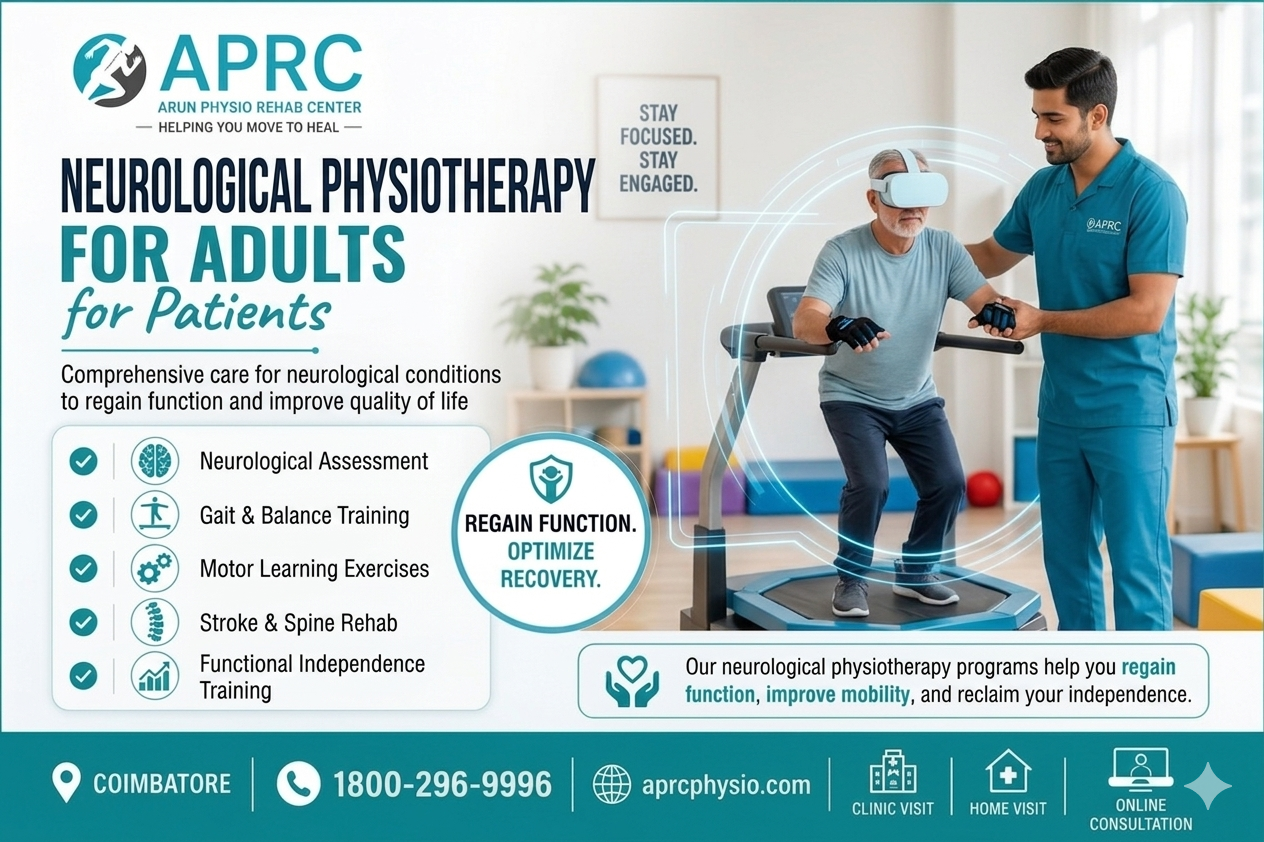
Neuro Physiotherapy in Coimbatore: Rehabilitation for Stroke, Parkinson's, Nerve Weakness, Balance Problems, and Walking Difficulty
Neurological conditions can affect movement, balance, walking, hand function, posture, coordination, strength, sensation, speech-related support needs, and independence in daily life.
For many families, the biggest concern is simple: "Will my father, mother, husband, wife, or child walk better again?"
Neuro physiotherapy helps people with brain, spinal cord, nerve, and movement-related conditions improve function through structured rehabilitation. It focuses on movement recovery, walking practice, balance training, muscle activation, coordination, posture, mobility, and day-to-day independence.
At APRC – Arun Physio Rehab Center, we provide neuro physiotherapy in Coimbatore through clinic-based rehabilitation, home visit physiotherapy, and online consultation when appropriate.
What Is Neuro Physiotherapy?
Neuro physiotherapy, also called neurological physiotherapy, is a specialized area of physiotherapy for people affected by conditions involving the brain, spinal cord, nerves, or neuromuscular system.
It helps people who have difficulty with:
- Walking
- Balance
- Standing
- Sitting control
- Hand movement
- Leg movement
- Muscle weakness
- Muscle tightness
- Coordination
- Posture
- Transfers from bed to chair
- Daily activities
- Confidence in movement
The goal is not only exercise. The goal is to improve useful movement and functional independence.
Who Needs Neuro Physiotherapy?
Neuro physiotherapy may help people with:
- Stroke
- Paralysis or hemiplegia
- Parkinson's disease
- Facial palsy
- Spinal cord injury
- Traumatic brain injury
- Nerve injury
- Peripheral neuropathy
- Multiple sclerosis
- Guillain-Barré syndrome
- Balance and coordination problems
- Gait disorders
- Muscle weakness after neurological illness
- Bedridden neurological conditions
- Post-hospitalization weakness
- Movement difficulty after brain or spine surgery
Each condition needs a customized rehabilitation plan based on assessment, medical stability, severity, goals, and functional ability.
Common Conditions Treated in Neuro Physiotherapy
1. Stroke Rehabilitation
Stroke can cause weakness on one side of the body, poor balance, walking difficulty, hand stiffness, shoulder pain, speech-related functional difficulty, and reduced independence.
Neuro physiotherapy after stroke may focus on bed mobility, sitting balance, standing balance, weight-bearing training, walking practice, hand and arm movement, shoulder care, spasticity management, transfer training, stair training, fall prevention, and family education.
2. Physiotherapy for Paralysis and Hemiplegia
After stroke or brain injury, some people develop paralysis or weakness on one side of the body. Physiotherapy helps by improving muscle activation, postural control, weight shifting, standing ability, walking pattern, hand and arm function, balance reactions, safe transfers, and confidence in movement.
3. Parkinson's Physiotherapy
Parkinson's disease can cause slow movement, stiffness, tremor, shuffling gait, reduced arm swing, forward-bent posture, freezing while walking, and balance problems.
Physiotherapy may include posture correction, large-amplitude movement practice, walking rhythm training, balance training, strengthening, flexibility exercises, turning practice, freezing management strategies, and fall prevention.
4. Balance Problems and Fall Risk
Neurological conditions often affect balance. Balance rehabilitation focuses on static balance, dynamic balance, weight shifting, stepping reactions, turning control, gait stability, safe walking aid use, and fall prevention education.
5. Walking Difficulty and Gait Training
Gait training may include step practice, weight-bearing control, foot clearance training, knee and hip control, use of walker or stick, walking speed improvement, turning practice, stair training, and endurance building.
6. Facial Palsy Physiotherapy
Facial palsy can affect facial movement, eye closure, mouth control, smile symmetry, and confidence. Physiotherapy may help with facial muscle re-education, gentle facial exercises, mirror feedback, relaxation techniques, and eye protection education.
7. Spinal Cord Injury Rehabilitation
Physiotherapy may focus on bed mobility, chest care, joint mobility, strengthening available muscles, sitting balance, transfer training, wheelchair mobility, standing frame use, pressure sore prevention, and caregiver training.
8. Nerve Injury and Peripheral Neuropathy
Physiotherapy helps with strengthening, balance training, sensory awareness, walking practice, foot and ankle control, fall prevention, and functional training.
9. Guillain-Barré Syndrome Rehabilitation
Physiotherapy may include gentle mobility, gradual strengthening, energy conservation, balance training, walking progression, fatigue monitoring, and functional independence training.
10. Multiple Sclerosis Rehabilitation
Physiotherapy may help with strength training, balance training, fatigue management, gait training, stretching, coordination exercises, and exercise pacing.
How Neuro Physiotherapy Helps
- Movement Re-Education – Helps relearn safer and more efficient movement patterns
- Strength Training – Improves muscle strength for sitting, standing, walking, and transfers
- Balance Training – Improves stability, reduces fall risk, increases confidence
- Gait Training – Improves walking ability, step control, posture, speed, and safety
- Spasticity Management – Helps manage muscle tightness and stiffness
- Coordination Training – Improves controlled movement and functional tasks
- Functional Task Practice – Focuses on real-life activities
- Caregiver Training – Guides family on safe transfers and support
- Home Safety Guidance – Reduces fall risk through environmental advice
Why Early Neuro Rehabilitation Matters
Delayed rehabilitation may lead to muscle stiffness, poor posture, reduced walking ability, loss of confidence, contractures, balance decline, dependency, and increased caregiver burden. Early physiotherapy should begin when the patient is medically stable.
Benefits of Neuro Physiotherapy
- Improve walking ability
- Improve balance
- Improve sitting and standing control
- Improve hand and leg function
- Reduce stiffness
- Improve posture
- Reduce fall risk
- Improve confidence
- Improve independence in daily activities
- Support long-term quality of life
Home Visit Neuro Physiotherapy in Coimbatore
APRC provides home visit neuro physiotherapy in Coimbatore for stroke patients, Parkinson's patients, bedridden patients, elderly neurological patients, and those with walking difficulty or using a walker or wheelchair.
Clinic-Based Neuro Physiotherapy
Clinic-based care includes neuro assessment, balance rehabilitation, gait training, strength training, functional task practice, hand function training, and postural control training.
Online Neuro Physiotherapy Consultation
Online neuro physiotherapy may be useful for follow-up guidance, caregiver education, exercise progression, home safety advice, and maintenance programs. High-risk patients need direct assessment.
Why Choose APRC for Neuro Physiotherapy in Coimbatore?
APRC provides professional neuro physiotherapy through clinic visits, home visits, and online consultation – focusing on meaningful function: sitting better, standing better, walking safer, and improving daily-life independence.
Frequently Asked Questions
1. What is neuro physiotherapy?
Neuro physiotherapy is physiotherapy for people with brain, spinal cord, nerve, and movement-related conditions.
2. Who needs neuro physiotherapy?
People with stroke, paralysis, Parkinson's, nerve weakness, spinal cord injury, facial palsy, balance problems, or walking difficulty.
3. Can physiotherapy help stroke patients walk again?
Physiotherapy can help many stroke patients improve walking ability depending on severity, recovery stage, and consistency.
4. Is home neuro physiotherapy available in Coimbatore?
Yes. APRC provides home visit neuro physiotherapy in Coimbatore.
5. Can physiotherapy help Parkinson's disease?
Yes. Physiotherapy can help improve posture, walking pattern, balance, flexibility, strength, and confidence.
6. Can neuro physiotherapy reduce fall risk?
Yes. Balance training, strength training, gait training, and home safety education help reduce fall risk.
7. How many sessions are needed?
Depends on condition, severity, goals, age, and progress. A physiotherapist suggests a plan after assessment.
8. Can online neuro physiotherapy help?
Online care may help selected patients with follow-up guidance and home exercise monitoring.
9. Is neuro physiotherapy useful for bedridden patients?
Yes. Physiotherapy helps with positioning, joint mobility, bed mobility, strengthening, and prevention of complications.
10. How can I book neuro physiotherapy at APRC?
Contact APRC to book clinic, home visit, or online consultation for neuro physiotherapy in Coimbatore.
Book Neuro Physiotherapy in Coimbatore
APRC – Arun Physio Rehab Center provides neuro physiotherapy through Clinic Visit | Home Visit | Online Consultation.
Call APRC today to book a neuro physiotherapy assessment.
Disclaimer
This blog is for general awareness only. It is not a replacement for medical diagnosis, neurologist consultation, emergency care, or hospital treatment.

