Orthopedic Physiotherapy in Coimbatore: Expert Care for Back Pain, Neck Pain, Joint Pain, Arthritis, Fracture Recovery, and Post-Surgical Rehab
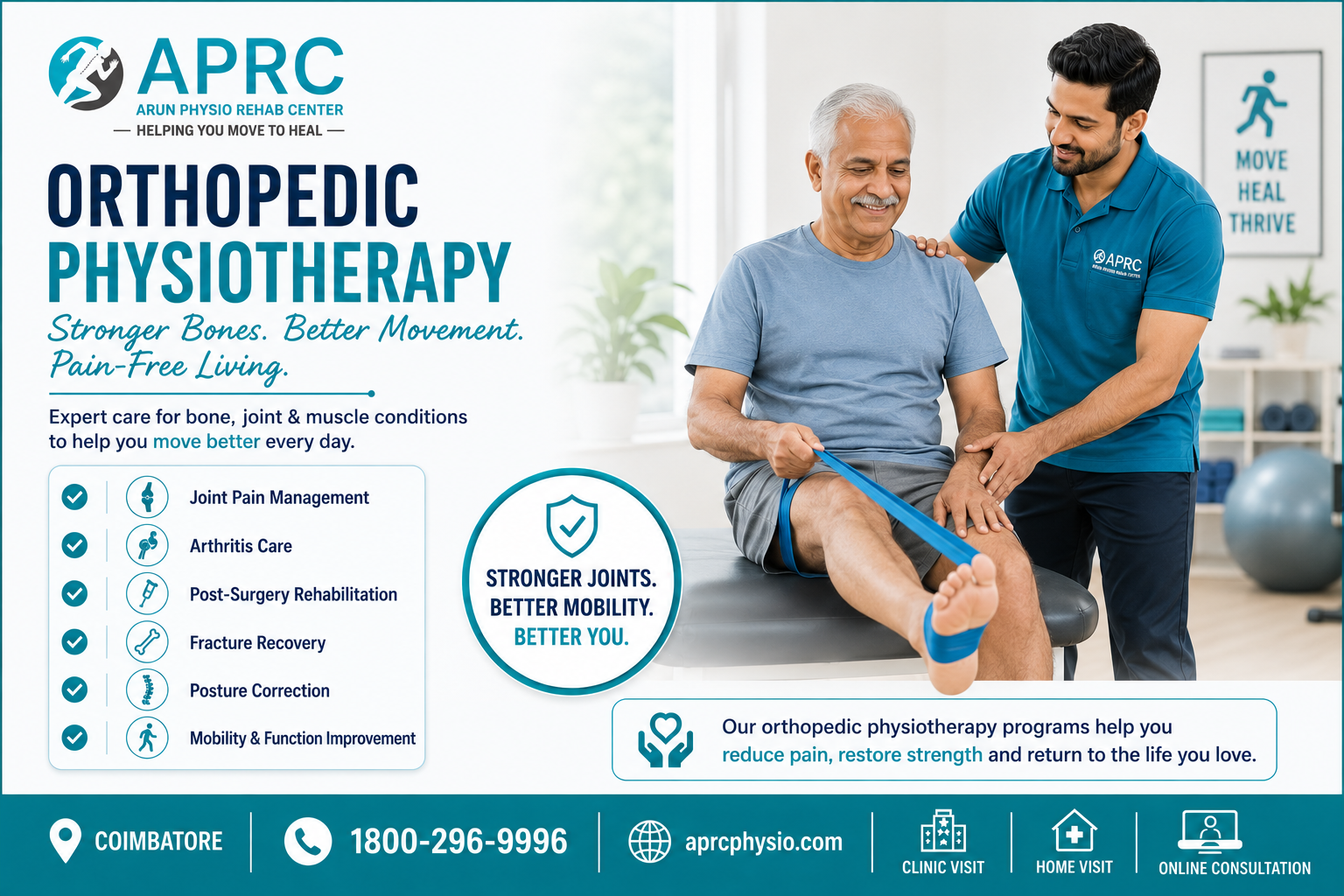
Orthopedic Physiotherapy in Coimbatore: Expert Care for Back Pain, Neck Pain, Joint Pain, Arthritis, Fracture Recovery, and Post-Surgical Rehab
Pain in the back, neck, shoulder, knee, hip, or ankle can affect work, sleep, walking, exercise, and daily life. Many people manage orthopedic pain with rest, painkillers, massage, or temporary relief methods. But when the same pain keeps returning, the real issue may be weakness, stiffness, poor posture, joint overload, muscle imbalance, or incorrect movement pattern.
Orthopedic physiotherapy helps people recover from bone, joint, muscle, ligament, tendon, and post-surgical conditions through structured assessment, pain management, strengthening, mobility training, and functional rehabilitation.
At APRC – Arun Physio Rehab Center, we provide orthopedic physiotherapy in Coimbatore through clinic-based care, home visit physiotherapy, and online consultation.
What Is Orthopedic Physiotherapy?
Orthopedic physiotherapy is a specialized area of physiotherapy that focuses on problems related to the musculoskeletal system.
This includes:
- Bones
- Joints
- Muscles
- Ligaments
- Tendons
- Cartilage
- Spine
- Posture
- Movement patterns
- Post-surgical recovery
Orthopedic physiotherapy helps reduce pain, improve mobility, restore strength, correct movement issues, and support return to normal activities.
It is useful for people with back pain, neck pain, knee pain, arthritis, shoulder pain, frozen shoulder, sciatica, fracture recovery, ligament injuries, muscle strains, and post-surgical rehabilitation.
Who Needs Orthopedic Physiotherapy?
You may need orthopedic physiotherapy if pain or stiffness is affecting your daily function.
Common signs include:
- Back pain while sitting, standing, bending, or lifting
- Neck pain due to work posture or mobile use
- Shoulder pain while lifting the arm
- Knee pain while walking or climbing stairs
- Hip pain while standing or walking
- Heel pain during the first steps in the morning
- Sciatica or pain travelling from back to leg
- Frozen shoulder stiffness
- Arthritis-related joint pain
- Difficulty after fracture or plaster removal
- Weakness after surgery
- Repeated sprain or strain
- Pain that keeps coming back
- Reduced confidence in movement
Early physiotherapy can help prevent chronic pain, stiffness, weakness, and long-term movement limitations.
Common Conditions Treated in Orthopedic Physiotherapy
1. Back Pain Physiotherapy
Back pain is one of the most common orthopedic problems. It can happen due to prolonged sitting, poor posture, disc problems, weak core muscles, muscle strain, heavy lifting, or reduced physical activity.
Physiotherapy for back pain may include:
- Pain management
- Posture correction
- Core strengthening
- Hip mobility exercises
- Spinal mobility exercises
- Ergonomic advice
- Safe bending and lifting training
- Gradual return to activity
The goal is not only temporary pain relief. The goal is to reduce recurrence and improve long-term spine function.
2. Neck Pain Physiotherapy
Neck pain is common among people who work on computers, use mobile phones for long hours, drive frequently, or sleep in poor positions.
Physiotherapy can help with:
- Neck mobility
- Shoulder and upper back strengthening
- Posture correction
- Workstation advice
- Pain relief techniques
- Headache-related neck stiffness management
- Muscle relaxation and strengthening
Persistent neck pain should be assessed early, especially if it is associated with arm pain, numbness, tingling, or weakness.
3. Knee Pain Physiotherapy
Knee pain can affect walking, stair climbing, squatting, sitting on the floor, running, and daily work.
Common causes include:
- Osteoarthritis
- Muscle weakness
- Patellofemoral pain
- Ligament injury
- Meniscus injury
- Tendon overload
- Poor hip and ankle control
- Post-surgical weakness
Physiotherapy helps improve knee strength, joint movement, walking pattern, balance, and functional ability.
4. Arthritis Physiotherapy
Arthritis can cause joint pain, stiffness, swelling, and reduced movement. Many people stop moving because of arthritis pain, but complete rest can increase stiffness and weakness.
Physiotherapy helps with:
- Joint mobility
- Muscle strengthening
- Pain management
- Walking improvement
- Activity modification
- Weight-bearing tolerance
- Balance training
- Home exercise planning
For osteoarthritis, exercise is a core part of management and should be tailored to the person's needs and ability.
5. Shoulder Pain Physiotherapy
Shoulder pain can affect dressing, bathing, lifting, sleeping, driving, and work.
Common shoulder problems include:
- Frozen shoulder
- Rotator cuff injury
- Shoulder impingement
- Tendon pain
- Postural shoulder pain
- Post-fracture stiffness
- Post-surgery weakness
Physiotherapy helps restore shoulder mobility, strength, posture, scapular control, and daily function.
6. Frozen Shoulder Physiotherapy
Frozen shoulder causes pain and stiffness that can make it difficult to lift the arm, reach behind the back, wear clothes, or sleep comfortably.
Physiotherapy may include:
- Gentle mobility exercises
- Pain-relieving techniques
- Shoulder stretching
- Strengthening
- Postural correction
- Functional arm training
- Home exercise guidance
Recovery usually takes time, so consistency is critical.
7. Sciatica Physiotherapy
Sciatica is pain that travels from the lower back to the buttock, thigh, leg, or foot due to irritation of the sciatic nerve or related structures.
Symptoms may include:
- Pain travelling down the leg
- Tingling
- Numbness
- Burning pain
- Pain while sitting
- Pain while bending
- Weakness in the leg
Physiotherapy helps with movement correction, nerve mobility when appropriate, posture advice, core strengthening, hip mobility, and safe activity progression.
8. Fracture Rehabilitation
After a fracture, plaster, surgery, or immobilization, the affected area can become stiff, weak, swollen, and painful.
Physiotherapy helps restore:
- Joint movement
- Muscle strength
- Walking ability
- Grip strength
- Balance
- Functional use
- Confidence
- Return to work or activity
9. Post-Surgical Orthopedic Rehabilitation
After orthopedic surgery, physiotherapy plays a major role in recovery.
Common post-surgical conditions include:
- Total knee replacement
- Total hip replacement
- ACL reconstruction
- Meniscus surgery
- Rotator cuff repair
- Spine surgery
- Fracture fixation
- Ligament repair
- Shoulder surgery
10. Heel Pain and Plantar Fasciitis
Heel pain is common in people who stand for long hours, walk excessively, use poor footwear, or suddenly increase activity.
Physiotherapy can help with foot and ankle mobility, calf stretching, foot strengthening, load management, footwear advice, pain-relieving strategies, and gradual walking progression.
How Orthopedic Physiotherapy Helps
Orthopedic physiotherapy is based on assessment, diagnosis, pain severity, movement limitation, strength level, lifestyle, occupation, and functional goals.
Pain Management
Physiotherapy helps reduce pain using evidence-informed techniques, movement correction, exercise, manual therapy where appropriate, and education.
Mobility Training
Stiff joints and tight muscles can limit function. Mobility exercises help restore smoother movement.
Strength Training
Weak muscles increase joint stress. Strength training helps support the spine, knees, shoulders, hips, and ankles.
Posture Correction
Postural correction is important for desk workers, drivers, students, homemakers, and people with recurrent neck or back pain.
Functional Training
Functional training helps patients return to daily tasks such as walking, climbing stairs, lifting, bending, sitting, standing, driving, and work.
Ergonomic Advice
Workstation setup, sitting posture, lifting method, footwear, sleeping position, and activity pacing can influence recovery.
Home Exercise Program
A clear home exercise plan helps continue recovery between sessions and reduces dependency on passive treatment.
Benefits of Orthopedic Physiotherapy
- Reduce pain
- Improve joint movement
- Improve muscle strength
- Improve posture
- Walk better
- Climb stairs with more confidence
- Recover after fracture
- Recover after surgery
- Reduce stiffness
- Return to work
- Return to sport or fitness
- Reduce repeated pain episodes
- Improve daily activity tolerance
- Avoid unnecessary fear of movement
Home Visit Orthopedic Physiotherapy in Coimbatore
APRC provides home visit orthopedic physiotherapy in Coimbatore for patients who need safe rehabilitation at home. Home physiotherapy is helpful for post-surgery patients, knee replacement, hip replacement, fracture recovery, elderly with joint pain, severe back pain, walking difficulty, and patients who cannot travel safely.
Clinic-Based Orthopedic Physiotherapy
Clinic-based care is suitable for patients who need structured assessment, progressive strengthening, supervised exercise, pain management, and functional rehabilitation for back pain, neck pain, knee pain, shoulder pain, frozen shoulder, arthritis, sciatica, sports-related pain, and post-surgical strengthening.
Online Orthopedic Physiotherapy Consultation
Online consultation is useful for exercise guidance, posture correction, follow-up review, ergonomic advice, and home exercise progression for selected orthopedic problems.
When Should You Consult an Orthopedic Physiotherapist?
- Pain lasts more than a few days
- Pain keeps coming back
- Movement is restricted
- Walking is affected
- Pain affects sleep or work
- Stiffness is increasing
- Pain travels to arm or leg
- Weakness after surgery
- Recovering from fracture
- Avoiding activity due to fear
Why Choose APRC for Orthopedic Physiotherapy in Coimbatore?
APRC provides professional orthopedic physiotherapy through clinic visits, home visits, and online consultation. Our approach focuses on pain relief, root-cause correction, functional recovery, and long-term movement confidence.
Frequently Asked Questions
1. What is orthopedic physiotherapy?
Orthopedic physiotherapy is physiotherapy care for bone, joint, muscle, ligament, tendon, spine, and post-surgical problems.
2. Who needs orthopedic physiotherapy?
People with back pain, neck pain, knee pain, shoulder pain, arthritis, frozen shoulder, sciatica, fracture recovery, or post-surgery weakness.
3. Can physiotherapy help back pain?
Yes. Physiotherapy can help by improving movement, posture, core strength, flexibility, and activity tolerance.
4. Can physiotherapy help knee arthritis?
Yes. Physiotherapy can help by improving strength, joint movement, walking ability, balance, and pain management.
5. Is physiotherapy needed after orthopedic surgery?
Yes. Physiotherapy is commonly needed to restore movement, strength, walking ability, and functional independence.
6. Can physiotherapy help frozen shoulder?
Yes. Physiotherapy can help improve shoulder movement, reduce stiffness, improve strength, and support daily activities.
7. Is home physiotherapy available in Coimbatore?
Yes. APRC provides home visit physiotherapy for patients recovering from surgery, fracture, severe pain, or walking difficulty.
8. Can online physiotherapy help orthopedic pain?
Online physiotherapy can help selected cases through exercise guidance, posture correction, ergonomic advice, and follow-up review.
9. How many sessions are needed?
The number of sessions depends on the condition, severity, goals, and progress. A physiotherapist can suggest a plan after assessment.
10. How can I book orthopedic physiotherapy at APRC?
Contact APRC to book clinic, home visit, or online consultation for orthopedic physiotherapy in Coimbatore.
Book Orthopedic Physiotherapy in Coimbatore
APRC – Arun Physio Rehab Center provides orthopedic physiotherapy through Clinic Visit | Home Visit | Online Consultation.
Call APRC today to book an orthopedic physiotherapy assessment.
Disclaimer
This blog is for general awareness only. It is not a replacement for medical diagnosis, orthopedic consultation, imaging, surgery advice, or emergency care.

