Sports Physiotherapy in Coimbatore: Injury Recovery, Pain Relief, Performance, and Safe Return to Sport
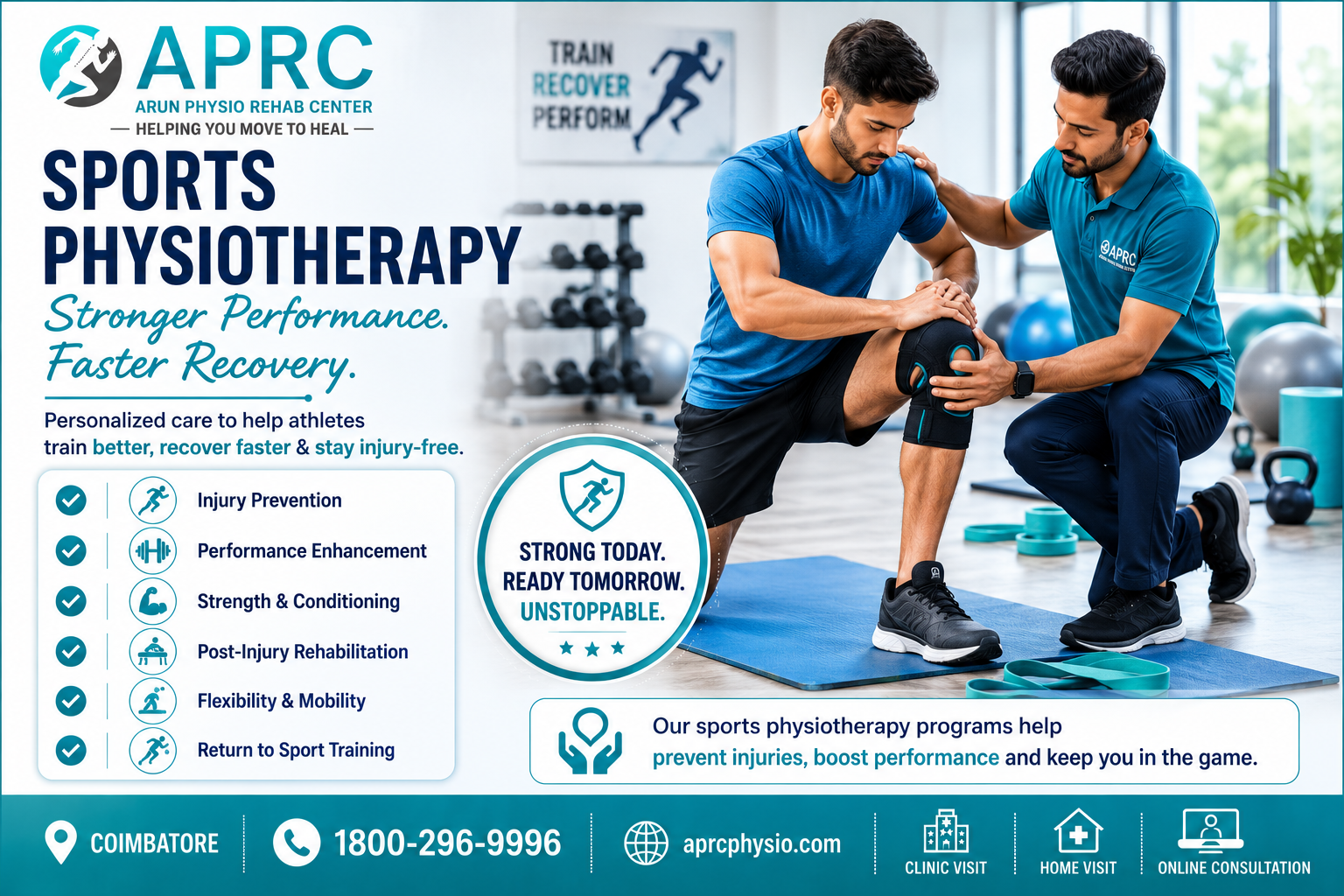
Sports Physiotherapy in Coimbatore: Injury Recovery, Pain Relief, Performance, and Safe Return to Sport
Sports are not only for professional athletes. Today, many people play cricket, football, badminton, volleyball, tennis, running, cycling, gym training, CrossFit, turf games, weekend matches, and school or college sports.
But when pain or injury starts, many people either ignore it or take rest for a few days and return to play too early. This can lead to repeated injury, poor performance, long-term pain, and loss of confidence.
Sports physiotherapy helps players, fitness enthusiasts, students, runners, weekend warriors, and active adults recover from sports injuries safely and return to their sport with better strength, movement, control, and confidence.
At APRC - Arun Physio Rehab Center, we provide sports physiotherapy in Coimbatore through clinic-based rehabilitation, sports injury assessment, home exercise guidance, and online consultation.
What Is Sports Physiotherapy?
Sports physiotherapy is a specialized area of physiotherapy focused on the prevention, assessment, treatment, rehabilitation, and performance recovery of sports and exercise-related injuries.
It is useful for:
Professional athletes
School and college players
Weekend sports players
Runners
Gym-goers
Badminton players
Football players
Cricket players
Volleyball players
Tennis players
Cyclists
Fitness beginners
Active adults with pain during exercise
The goal is not only pain relief. The bigger goal is to identify the movement problem, rebuild strength, improve control, reduce re-injury risk, and help the person return safely to sport.
Common Sports Injuries Treated by Physiotherapy
Sports injuries can affect muscles, ligaments, tendons, joints, bones, and nerves. Some injuries happen suddenly during play. Others develop slowly because of overload, poor technique, weakness, stiffness, or repeated strain.
Common sports injuries include:
Ankle sprain
Knee pain
ACL injury rehabilitation
Meniscus injury rehabilitation
Shoulder pain
Rotator cuff injury
Tennis elbow
Golfer’s elbow
Hamstring strain
Calf strain
Groin pain
Shin pain
Heel pain
Plantar fasciitis
Back pain during sports
Neck pain during gym training
Wrist pain
Muscle pull
Ligament sprain
Tendon pain
Post-fracture sports rehabilitation
Post-surgical sports rehabilitation
Early assessment helps decide whether the injury needs physiotherapy, medical review, imaging, bracing, or specialist referral.
Why Sports Injuries Should Not Be Ignored
Many players continue playing with pain because they think it is “normal soreness.” But pain that repeats during sport, increases after activity, or affects performance should be assessed.
Ignoring sports injuries can lead to:
Longer recovery time
Repeated injury
Weakness
Reduced speed
Poor balance
Loss of confidence
Compensatory movement
Chronic pain
Reduced sports performance
Higher risk of future injury
A good sports physiotherapy plan helps the player recover in phases instead of rushing back too early.
Signs You Need Sports Physiotherapy
You should consult a sports physiotherapist if you have:
Pain during or after playing
Swelling after injury
Difficulty walking or running
Repeated ankle sprain
Knee giving way
Shoulder pain while throwing or lifting
Back pain during gym training
Pain while jumping or landing
Muscle pull that keeps returning
Reduced flexibility
Poor balance or coordination
Loss of speed or performance
Fear of returning to sport after injury
Post-surgery weakness
Pain that does not improve with rest
Early physiotherapy can reduce downtime and support safer return to activity.
How Sports Physiotherapy Helps
Sports physiotherapy is not just massage, machine therapy, or pain relief. It is a structured rehabilitation pathway designed around the sport, injury type, tissue healing stage, strength level, movement quality, and return-to-play goals.
A sports physiotherapy plan may include:
Injury Assessment
The physiotherapist assesses pain, swelling, movement, strength, flexibility, balance, posture, sports technique, and functional ability.
Pain and Swelling Management
Initial care may focus on reducing pain, controlling swelling, protecting the injured area, and restoring safe movement.
Mobility and Flexibility Training
Sports injuries often cause stiffness. Mobility exercises help restore normal joint and muscle movement.
Strength Training
Strengthening is essential for recovery. The plan may include progressive strengthening for the injured area and supporting muscles.
Balance and Proprioception Training
Many sports injuries affect body control. Balance training helps improve stability, landing control, turning, and reaction.
Sports-Specific Rehabilitation
A badminton player, football player, runner, and gym-goer do not need the same rehab plan. Sports-specific training helps prepare the body for the actual demands of the sport.
Return-to-Run Training
For runners and field sport players, return-to-run programs help progress from walking to jogging, running, sprinting, cutting, and direction changes.
Return-to-Sport Testing
Before returning to full sport, the player should be checked for strength, balance, control, confidence, pain-free movement, and sport-specific performance.
Injury Prevention Education
Players are guided on warm-up, cool-down, recovery, load management, footwear, training errors, sleep, hydration, and safe progression.
Sports Physiotherapy for Ankle Sprain
Ankle sprain is one of the most common sports injuries. It often happens during running, jumping, landing, turning, or uneven ground movement.
Physiotherapy helps with:
Pain and swelling management
Ankle mobility
Strengthening
Balance training
Proprioception training
Walking and running progression
Taping or support guidance when needed
Return-to-sport preparation
Repeated ankle sprains should not be ignored because they may lead to chronic instability.
Sports Physiotherapy for Knee Pain
Knee pain is common in runners, football players, badminton players, gym-goers, and people who play turf sports.
Sports-related knee pain may happen due to:
Poor landing control
Weak hip and thigh muscles
Overtraining
Sudden increase in running or jumping
Poor footwear
Muscle tightness
ACL or ligament injury
Meniscus injury
Patellar tendon overload
Poor movement mechanics
Physiotherapy helps improve strength, alignment, balance, movement control, and safe return to sport.
ACL Rehabilitation and Return to Sport
ACL injury is a serious knee injury that often happens during sudden stopping, twisting, landing, or direction change.
ACL rehabilitation may be needed before surgery, after surgery, or in selected non-surgical cases based on medical advice.
A structured ACL rehab program usually focuses on:
Swelling control
Knee range of motion
Quadriceps activation
Hip and core strength
Balance and landing control
Walking and running progression
Jumping and agility drills
Sport-specific training
Return-to-sport readiness
Returning to sport after ACL injury should not be based only on time. Strength, control, confidence, and functional testing are important.
Sports Physiotherapy for Shoulder Pain
Shoulder pain is common in cricket, badminton, volleyball, tennis, swimming, and gym training.
It may be caused by:
Rotator cuff overload
Poor shoulder blade control
Weakness
Repeated throwing
Poor gym technique
Mobility restriction
Tendon irritation
Instability
Previous injury
Physiotherapy helps restore shoulder mobility, strength, scapular control, throwing mechanics, and safe loading.
Sports Physiotherapy for Runners
Runners may experience knee pain, shin pain, heel pain, calf pain, hip pain, or back pain due to training errors, poor recovery, weakness, or running mechanics.
Physiotherapy for runners may include:
Running injury assessment
Strength training
Mobility correction
Foot and ankle conditioning
Load management
Return-to-run program
Running technique guidance
Recovery planning
Pain while running should be managed early before it becomes a long-term injury.
Sports Physiotherapy for Gym Injuries
Gym injuries are common due to poor technique, sudden heavy lifting, lack of warm-up, poor mobility, or overtraining.
Common gym-related problems include:
Shoulder pain
Lower back pain
Neck pain
Wrist pain
Knee pain
Muscle strain
Tendon pain
Poor posture during lifting
Physiotherapy helps correct movement, improve strength balance, and guide safe return to training.
Warm-Up and Cool-Down: Why They Matter
Many sports injuries happen because the body is pushed suddenly without preparation.
A proper warm-up helps prepare the muscles, joints, heart, nervous system, and movement pattern before play.
A cool-down helps the body gradually return to resting state and supports recovery.
A good routine may include:
Light jogging or movement
Dynamic mobility
Sport-specific drills
Gradual speed progression
Gentle stretching after activity
Breathing and recovery work
Skipping warm-up may save 10 minutes, but an injury can cost weeks or months.
Return to Sport: When Is It Safe?
Returning to sport too early is one of the biggest mistakes after injury.
A safer return to sport should consider:
Pain-free daily activity
Full or near-full joint movement
Good strength
Good balance
Proper landing control
Confidence during movement
Ability to run, jump, turn, and stop safely
Sport-specific tolerance
No swelling after training
Physiotherapist or medical clearance when needed
The goal is not just to “play again.” The goal is to return without repeated injury.
Benefits of Sports Physiotherapy
Sports physiotherapy can help you:
Reduce pain
Recover from injury safely
Improve strength
Improve flexibility
Improve balance and coordination
Correct movement faults
Return to running or sport
Prevent repeated injuries
Improve performance
Build confidence after injury
Plan safe exercise progression
Reduce unnecessary rest and fear
A proper rehab plan protects both performance and long-term joint health.
Sports Injury Prevention Tips
To reduce injury risk:
Warm up before every game
Do not suddenly increase training intensity
Strengthen muscles regularly
Work on balance and coordination
Use proper footwear
Avoid playing when extremely tired
Take rest seriously
Do not ignore pain
Learn correct gym technique
Follow gradual return after injury
Hydrate well
Sleep adequately
Seek early assessment for repeated pain
Prevention is always better than long recovery.
Home Exercise Guidance for Sports Injuries
Not every sports injury requires daily clinic visits. Many cases need a clear home exercise plan, regular monitoring, and progression.
APRC provides structured home exercise guidance for:
Mild sports injuries
Recovery phase
Return-to-run progression
Strength maintenance
Injury prevention
Post-session follow-up
Online supervision when appropriate
Correct exercise selection and progression are more important than doing random exercises from the internet.
Clinic-Based Sports Physiotherapy in Coimbatore
Clinic-based sports physiotherapy is useful for detailed assessment, hands-on care, supervised strengthening, movement correction, and return-to-sport progression.
At APRC, sports physiotherapy may include:
Sports injury assessment
Pain management
Strength training
Mobility correction
Balance and stability training
Sports-specific rehabilitation
Return-to-play planning
Injury prevention education
The treatment plan is customized based on the player’s sport, age, injury, goals, and current fitness level.
Online Sports Physiotherapy Consultation
Online sports physiotherapy can be useful for people who need exercise guidance, second opinion, follow-up progression, posture correction, training modification, or return-to-run planning.
Online consultation may help:
Runners
Gym-goers
Weekend players
Students
People with mild pain
People needing follow-up exercise correction
Players outside Coimbatore
Online care is recommended only when the condition is safe for remote guidance. Severe injury, major swelling, suspected fracture, or sudden instability may need direct assessment.
Why Choose APRC for Sports Physiotherapy in Coimbatore?
APRC – Arun Physio Rehab Center provides professional sports physiotherapy and sports injury rehabilitation in Coimbatore.
APRC provides:
Sports injury assessment
Knee pain rehabilitation
Ankle sprain rehabilitation
ACL rehabilitation support
Shoulder injury rehabilitation
Back pain sports rehab
Gym injury physiotherapy
Runner’s injury guidance
Sports-specific strengthening
Balance and coordination training
Return-to-sport planning
Injury prevention education
Clinic visit and online consultation
Our focus is clear: reduce pain, rebuild strength, improve movement, and help you return to activity safely.
Frequently Asked Questions
1. What is sports physiotherapy?
Sports physiotherapy is physiotherapy care for sports and exercise-related injuries. It helps with injury recovery, pain relief, strengthening, movement correction, performance improvement, and safe return to sport.
2. Who needs sports physiotherapy?
Athletes, runners, gym-goers, school players, college players, weekend sports players, and active adults with pain or injury during activity may need sports physiotherapy.
3. Can physiotherapy help ankle sprain?
Yes. Physiotherapy can help reduce pain and swelling, restore ankle movement, improve strength, improve balance, and reduce repeated ankle sprain risk.
4. Can sports physiotherapy help knee pain?
Yes. Physiotherapy can help knee pain by improving strength, flexibility, alignment, balance, landing control, and training load management.
5. Can I return to sport once pain reduces?
Pain reduction alone is not enough. You should have good strength, movement, balance, control, confidence, and sport-specific readiness before returning fully.
6. Is physiotherapy needed after ACL surgery?
Yes. ACL rehabilitation after surgery is very important to restore knee movement, strength, balance, walking, running, jumping, and sport-specific control.
7. Can physiotherapy help shoulder pain in cricket or badminton players?
Yes. Sports physiotherapy can help improve shoulder mobility, rotator cuff strength, scapular control, throwing mechanics, and safe return to sport.
8. Is online sports physiotherapy useful?
Online sports physiotherapy can be useful for selected cases such as exercise guidance, follow-up, mild pain, training correction, and return-to-run planning. Serious injuries need direct assessment.
9. How long does sports injury recovery take?
Recovery time depends on the injury type, severity, tissue involved, fitness level, treatment consistency, and return-to-sport demands. A physiotherapist can guide the expected timeline after assessment.
10. How can I book sports physiotherapy at APRC?
You can contact APRC to book sports injury assessment, clinic physiotherapy, or online consultation in Coimbatore.
Voice Search Questions This Blog Answers
Who provides sports physiotherapy in Coimbatore?
Where can I find a sports physiotherapist near me?
Can physiotherapy help ankle sprain?
What is the best physiotherapy for sports knee pain?
Can physiotherapy help ACL injury recovery?
When can I return to sport after injury?
Who treats badminton shoulder pain in Coimbatore?
Can physiotherapy help running injuries?
Where can I get sports injury rehab in Coimbatore?
Is physiotherapy useful for gym injuries?
Book Sports Physiotherapy in Coimbatore
If sports pain or injury is stopping you from playing, training, running, or exercising, do not wait until it becomes chronic.
APRC – Arun Physio Rehab Center provides sports physiotherapy and sports injury rehabilitation through:
Clinic Visit | Online Consultation | Sports-Specific Rehab Guidance
Call APRC today to book a sports physiotherapy assessment.
Phone: 1800-296-9996
Website: aprcphysio.com
Location: Coimbatore
Disclaimer
This blog is for general awareness only. It is not a replacement for medical diagnosis, emergency care, orthopedic consultation, or sports medicine evaluation. If you have severe pain, major swelling, deformity, inability to bear weight, suspected fracture, repeated knee giving way, head injury, loss of consciousness, chest pain, or breathlessness during sport, seek immediate medical attention.

